Costly treatment
Poor families skip treatment because medicines and doctor fees are too expensive.
 NATA Welfare Foundation
Donate Now
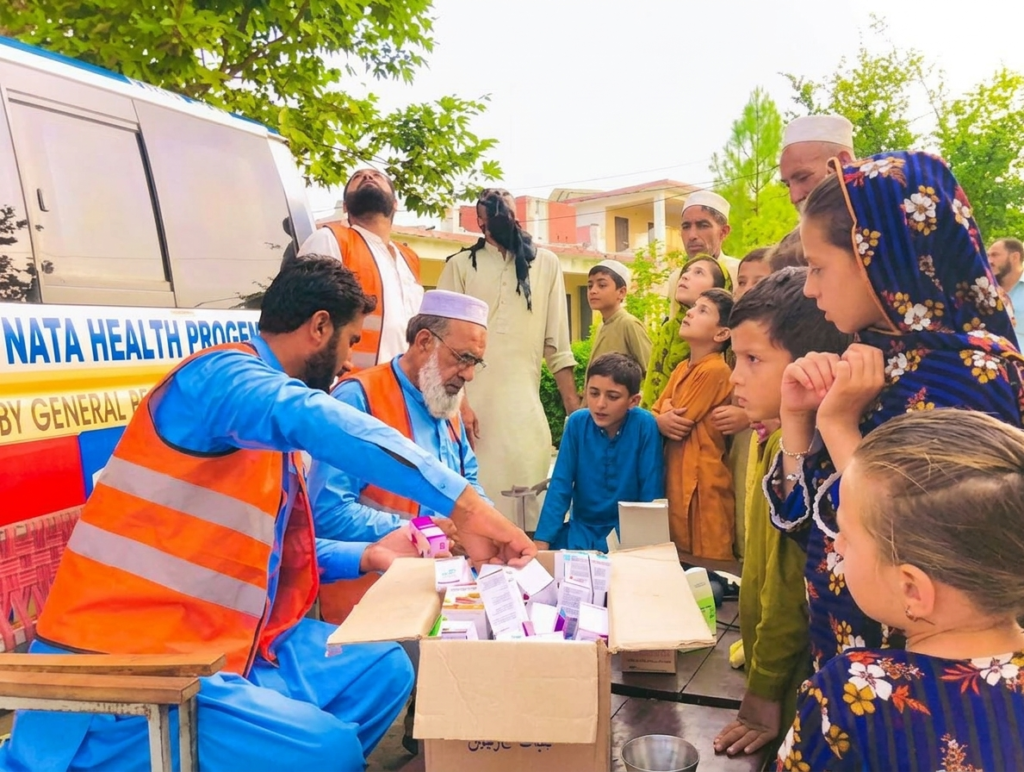
NHP works to bring affordable, dignified healthcare to families who are often forgotten.
Pakistan is one of the most populous countries in the world, and its health system is under heavy pressure. The government spends only about 3% of national income on health, so families often pay for care themselves. Reports show that more than half of all health spending comes straight out of people's own pockets.
Care is also very uneven. Big cities such as Karachi and Lahore have far more doctors, hospitals and health records than remote parts of Balochistan, Khyber Pakhtunkhwa and Gilgit-Baltistan. Villages often lack nurses, paramedics and trained birth attendants. About 100,000 Lady Health Workers carry basic care to people's doorsteps, but the need is much larger.
The disease burden is heavy and mixed. Infections such as tuberculosis, malaria, dengue and hepatitis remain common, polio has still not been fully removed, and illnesses such as diabetes are rising fast. Pakistan is estimated to have one of the largest diabetes populations in the world, and many cases go undiagnosed.
Mothers and children are especially at risk. Maternal deaths have fallen over the decades but are still high, and higher still in Balochistan, Sindh and rural areas. Around four in ten young children are stunted because of poor nutrition, and floods and heatwaves add new dangers. This is the gap NHP wants to help close.
Summarised in our own words from public sources: Wikipedia: Health in Pakistan. Figures change over time.
NHP
Healthcare
| Name of disease | Annual diagnosis | Annual deaths in Pakistan |
|---|---|---|
| Tuberculosis (TB) | About 686,000 estimated new cases; 475,761 diagnosed and reported (2023) | About 48,600 (2023) |
| Hepatitis B and C | About 12.9 million people living with it; over 88,000 new hepatitis C infections (2024) | More than 48,000 a year |
| Diabetes | 34.5 million adults living with it (2024) | About 227,000 (2024) |
| Cancer (all types) | 185,748 new cases (2022) | 118,631 (2022) |
| Breast cancer | 30,682 new cases (2022) | About 15,550 (2022) |
Figures are estimates from the latest available reports, and the year is different for each disease. Many of these deaths could be prevented with early diagnosis and treatment, and tuberculosis and hepatitis C are curable. No official count exists for deaths caused only by lack of treatment. Sources: WHO Global TB Report 2024 (as reported), WHO on hepatitis (Dunya News), IDF Diabetes Atlas, GLOBOCAN 2022 (IARC), WCRF breast cancer statistics.
Poor families skip treatment because medicines and doctor fees are too expensive.
People in remote areas travel for hours to reach a doctor or hospital.
Hygiene, nutrition, and disease prevention are rarely explained to the poor.
Weak maternal and child care leads to avoidable illness and deaths.
Doctors check patients and give basic medicines at no cost.
Support for tests, treatment, and medicines for needy patients.
Sessions on hygiene, clean water, and prevention.
Guidance and support for safe pregnancy and healthy children.
Awareness reduces illness before treatment is even needed.
Camps catch diseases early, when they are cheaper to treat.
Trained volunteers keep care available in every area.
Patients are tracked until they have recovered.
Write to the NHP team. Your message goes to the people who look after this program.
Email NHP teaminfo@nata.pk
Phone / WhatsApp: +92 300 4888796